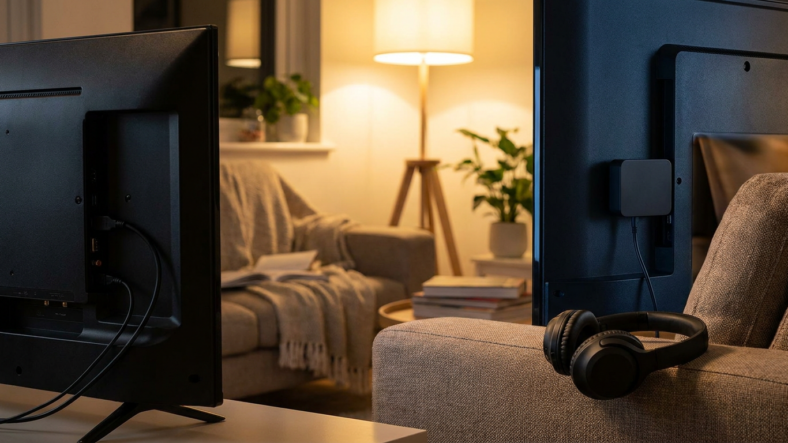



A bluetooth transmitter is a small device that takes a non-Bluetooth audio source, a TV, a turntable, a wired stereo output, and sends that sound wirelessly to Bluetooth headphones or speakers. You plug it into a headphone jack, RCA output, or optical port, pair it with your gear, and the audio jumps the gap without a cable.
You probably ran into this because your older TV has no Bluetooth built in and you want to watch late-night shows without waking anyone up. A transmitter solves that, and once you understand where it sits in the audio chain, picking the right one takes two minutes.
Transmitter vs Receiver: Who Does What
Every Bluetooth audio setup has two roles, and mixing them up is the most common shopping mistake.
The transmitter sits at the source. It takes sound that already exists, from a TV or an old stereo, and pushes it out over a Bluetooth signal. It is the device that talks. The bluetooth receiver sits at the destination and converts that wireless signal back into a wired connection, useful for adding Bluetooth to speakers that only take an aux cable. It is the device that listens.
Some units do both jobs and get labeled transmitter/receiver combos. TV plus wireless headphones means a transmitter. Wireless audio piped into old wired speakers means a receiver.
Where the Transmitter Fits in the Chain
Picture your setup as a line: source, transmitter, headphones or speaker. Most transmitters run on battery or USB power and plug directly into the TV headphone jack, RCA output, or optical port. Check which of those three your source actually has before buying, since not every transmitter supports all of them.
Why aptX Low Latency Matters for TV Audio
Standard Bluetooth audio has a small delay between the picture on screen and the sound in your headphones. On a phone call it goes unnoticed. On a TV show it shows up as lips out of sync with dialogue.
Transmitters and headphones that support aptX Low Latency cut that delay to a range where lip sync stays intact. If you plan to watch TV or play games through a transmitter, confirm both ends support it. Without aptX on both sides, you fall back to standard Bluetooth and the mismatch becomes obvious.
Common Setups a Transmitter Solves
- An older TV paired with headphones for quiet late-night viewing
- A turntable streaming to a Bluetooth speaker in another room
- Gym equipment with a headphone jack but no wireless output
- An airplane seatback screen paired with your headphones for the flight
The logic stays the same every time. Find the wired output, connect the transmitter, pair it with your headphones. If a shaky home network turns out to be the real issue, this router vs modem explainer is worth reading first.
Buying Considerations Beyond aptX
Battery life matters for a full movie or flight, so look for units rated for several hours of playback. Multipoint pairing lets one transmitter connect to two headphones at once, handy for couples watching TV together.
Match the connector to your source. A transmitter built only for a 3.5mm jack will not help with an optical output on a soundbar. For a wired-in-car option, this guide to bluetooth car adapters covers that side. If a wireless speaker keeps dropping signal, this wifi router buying guide walks through hardware that holds a stronger connection.
Do I need a transmitter or a receiver for my TV?
You need a transmitter. Your TV is the audio source, and a transmitter sends that wired output wirelessly to your Bluetooth headphones.
Can a bluetooth transmitter connect to two headphones at once?
Only if it specifically supports multipoint or dual-link pairing. Check the listing first, since this is not standard on every transmitter.
Does every bluetooth transmitter support aptX Low Latency?
No. Many budget transmitters use standard Bluetooth SBC only. If lip sync matters to you, confirm aptX support on both the transmitter and your headphones before buying.

Adriana Mercado is a writer who explores the intersection of science, futurism, and storytelling. She covers simulation theory, emerging technologies, strange biological discoveries, and the worlds created in sci-fi and fantasy. Her work focuses on curiosity, clear explanations, and uncovering ideas that sit just beyond the mainstream.