


A Bluetooth car adapter does not add CarPlay to your car. It streams audio and handles hands-free calls, nothing more. If you plugged one in expecting Apple’s interface to appear on your dashboard screen, you bought the wrong device for the job.
This mix-up costs people real money every year. Someone searches for a CarPlay dongle, buys a $20 device, and ends up with a slightly better aux connection instead of Apple’s interface on their dashboard. Knowing the difference first saves the return shipping.
What a Bluetooth Car Adapter Actually Does
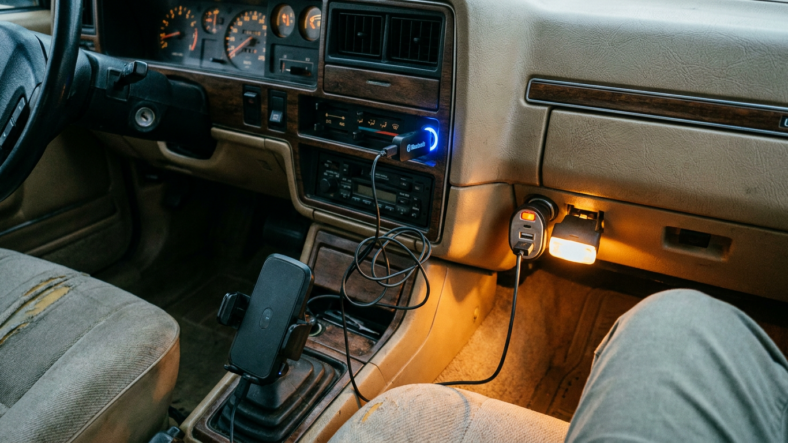
A plain Bluetooth car adapter is a small transmitter or receiver that pairs with your phone and pushes audio through your existing aux jack, FM signal, or cassette adapter. It also usually picks up your phone’s microphone for calls. That is the entire feature set.
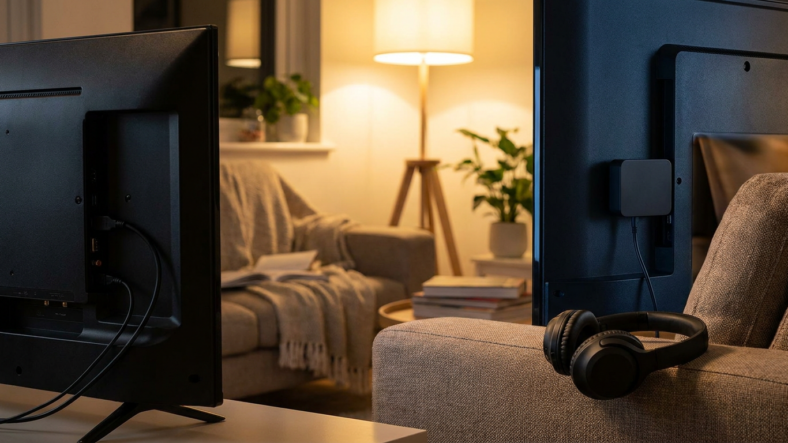
There is no screen mirroring involved. Your phone’s interface stays on your phone. The adapter is a bridge for sound, not for software, the same principle behind a Bluetooth transmitter sending audio from a laptop to a speaker.
What CarPlay Actually Requires
CarPlay is Apple’s software that mirrors a simplified version of your phone’s apps onto your car’s built-in touchscreen. That mirroring only works if the head unit itself was manufactured with CarPlay support built in.
No aftermarket audio dongle can add that capability to a screen never designed for it. The head unit needs software and a connection standard that recognizes an iPhone as a CarPlay source. Older factory radios almost never have this, whatever you plug into them.
The Adapter Category People Confuse This With
A separate, legitimate product category exists called wireless CarPlay adapters. These do something narrower than most buyers assume. They convert a head unit that already supports wired CarPlay into one that supports wireless CarPlay, so you stop plugging in a USB cable every trip.
A wireless CarPlay adapter cannot install CarPlay on a screen that never had it. It only removes the cable from a system already CarPlay-capable through USB. Mixing this up with a basic Bluetooth adapter is where most disappointed reviews come from.
How to Tell Which Situation You’re In
Check your dashboard for the Apple CarPlay logo, printed near the screen or visible in a settings menu. If it is there and you currently connect with a cable, a wireless CarPlay adapter is what you want.
If there is no CarPlay branding anywhere and your radio only shows a clock, station presets, or a basic Bluetooth audio screen, you have a standard head unit. A Bluetooth adapter is genuinely useful here, just not for the reason CarPlay searchers hope for. If your radio supports nothing wireless at all, start with our roundup of Bluetooth car adapters for older cars instead.
Why This Distinction Matters Before You Buy
Sellers often use “CarPlay” as a loose keyword on Bluetooth audio adapter listings because it drives clicks. Read past the title. Bluetooth pairing plus an aux cable means an audio adapter. A USB port that plugs into your existing wired CarPlay port means the wireless conversion type.
The underlying tech differs too, similar to how a Bluetooth transmitter differs from a receiver in signal direction. A wireless CarPlay adapter negotiates a full video data connection, a heavier job than moving audio.
Frequently Asked Questions
Can any Bluetooth adapter add CarPlay to a non-CarPlay car?
No. CarPlay requires software and hardware support built into the head unit itself. No dongle can install that capability afterward.
What is the actual difference between a Bluetooth adapter and a wireless CarPlay adapter?
A Bluetooth adapter streams audio and calls into an existing aux or FM input. A wireless CarPlay adapter only removes the USB cable from a head unit that already supports wired CarPlay.
How do I know if my car already supports CarPlay?
Look for the CarPlay logo on or near your dashboard screen, or check your car’s settings menu for a CarPlay option. If it is not listed anywhere, your radio does not support it.

Adriana Mercado is a writer who explores the intersection of science, futurism, and storytelling. She covers simulation theory, emerging technologies, strange biological discoveries, and the worlds created in sci-fi and fantasy. Her work focuses on curiosity, clear explanations, and uncovering ideas that sit just beyond the mainstream.