


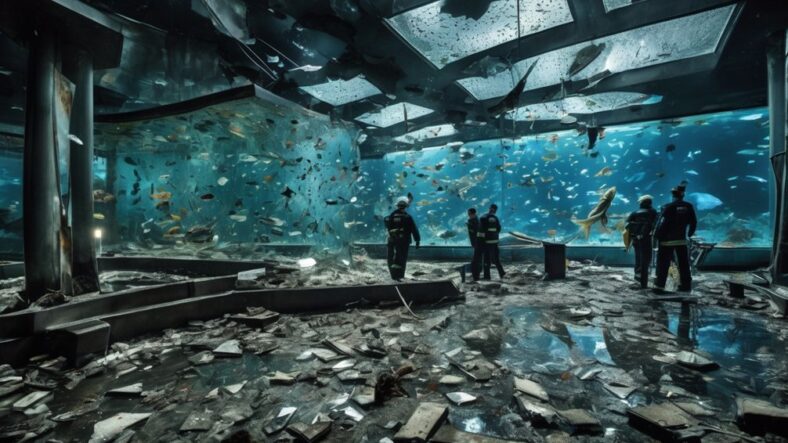
The Berlin Aquarium tank burst due to combined factors of structural weakening, unexpected pressure stresses, and design flaws that affected load distribution. Over time, materials degraded and maintenance did not fully address emerging risks, leading to failure. The rupture caused significant water loss and damage to nearby exhibits. To prevent future incidents, reinforced materials, regular inspections, and advanced monitoring systems are now essential. Understanding these causes and responses can provide deeper insights into how such failures happen and how they’re managed.
Causes Behind the Tank Rupture
Although tank ruptures are rare, several factors can contribute to such an incident at the Berlin Aquarium. You should consider structural failure as a primary cause, often resulting from materials weakening over time or unexpected pressure stresses.
Design flaws may also play a significant role, especially if the tank’s construction didn’t adequately account for load distribution or environmental factors. When these flaws combine with regular wear or inadequate maintenance, the risk of rupture increases.
Understanding these causes helps you appreciate the importance of rigorous engineering standards and ongoing inspections to maintain safety and prevent similar failures in large aquatic structures.
Immediate Impact and Damage Assessment
When the Berlin Aquarium tank ruptured, it immediately caused significant water loss and structural stress to the surrounding exhibits.
You witnessed fish loss due to the sudden environment change, and water damage compromised nearby infrastructure.
The immediate impact included:
- Rapid drainage led to unstable exhibit conditions.
- Fish loss affected biodiversity and required urgent care.
- Water damage weakened structural supports and electrical systems.
- Emergency response teams had to act swiftly to mitigate risks.
Understanding these effects helps you grasp the urgency and scale of the damage, emphasizing the need for timely assessment to protect both aquatic life and facility integrity.
Measures for Future Prevention and Safety Enhancements
Since the Berlin Aquarium incident revealed vulnerabilities in the tank’s design and maintenance, experts have focused on implementing stronger safety measures to prevent future failures.
You’ll notice that updated safety protocols now emphasize regular inspections and immediate repairs to address weaknesses early.
Design improvements include using reinforced materials and advanced monitoring systems that detect stress or leaks before they escalate.
These changes help guarantee tanks can withstand pressure fluctuations and environmental factors.
Frequently Asked Questions
How Many Animals Were Inside the Berlin Aquarium Tank?
You’d find around 100 animal species inside that tank, which nearly reached its full tank capacity. If you value freedom, you’d understand how confining so many creatures in one place can limit their natural behaviors.
Were Any Visitors Injured During the Aquarium Burst?
No visitors were injured during the aquarium burst. You’ll appreciate how visitor safety was prioritized, and emergency response teams acted swiftly to secure the area, ensuring everyone’s freedom to stay safe and avoid harm.
What Type of Materials Was the Tank Made From?
The tank’s construction used acrylic, chosen for its clarity and strength, but material durability wasn’t enough to prevent failure. You’d expect tougher materials to guarantee safety and freedom from such risks in public spaces like aquariums.
How Long Had the Aquarium Tank Been in Use Before Bursting?
The aquarium tank had been in use well beyond its intended tank lifespan, showing signs of wear due to inconsistent aquarium maintenance. You can’t ignore proper upkeep if you want to guarantee freedom from sudden failures.
Was the Aquarium Closed to the Public After the Incident?
Yes, they closed the aquarium immediately to guarantee public safety. You’ll appreciate that proper aquarium maintenance is essential, and this pause lets them fix issues so visitors can freely enjoy a safe, well-kept environment again soon.

Adriana Mercado is a writer who explores the intersection of science, futurism, and storytelling. She covers simulation theory, emerging technologies, strange biological discoveries, and the worlds created in sci-fi and fantasy. Her work focuses on curiosity, clear explanations, and uncovering ideas that sit just beyond the mainstream.