


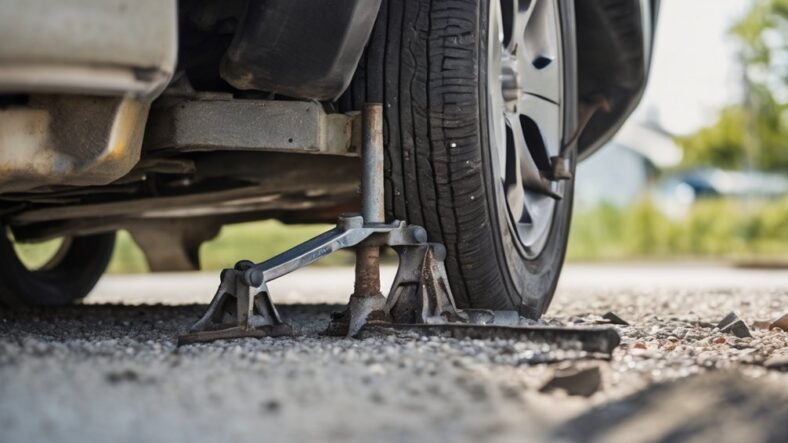
Your car jack likely failed due to mechanical defects like hydraulic leaks, worn seals, or structural damage such as cracks and rust. Improper use—like placing the jack off-center or on uneven ground—also reduces stability. Exceeding the jack’s load capacity stresses its parts, causing bends or breaks. Signs of failure include difficulty lifting or unstable footing. Regular maintenance and correct use are essential for safety. Understanding these factors helps clarify why your jack malfunctioned.
Common Mechanical Defects in Car Jacks
When you rely on a car jack, understanding its common mechanical defects can help prevent unexpected failures.
One frequent issue is hydraulic leakage, which reduces the jack’s ability to lift and hold weight securely. This leakage can stem from worn seals or damaged hoses.
Another critical concern is the structural integrity of the jack’s frame and components. Cracks, rust, or metal fatigue weaken the jack, increasing the risk of collapse under load.
Regular inspection for these defects guarantees your jack operates safely, maintaining the freedom to change tires or perform repairs without incident.
The Role of Improper Usage in Jack Failures
Although car jacks are designed to support heavy loads safely, improper usage often leads to failures that could have been avoided.
When you use improper technique, such as positioning the jack off-center or on uneven ground, you increase the risk of instability.
User negligence, including neglecting to follow the manufacturer’s instructions or skipping safety checks, also contributes greatly to jack failures.
These mistakes compromise the jack’s structural integrity and may cause sudden collapse.
To maintain your freedom and safety, it’s essential to use the jack correctly and remain attentive throughout the lifting process, preventing accidents before they happen.
Signs Your Car Jack Is Unsafe to Use
Improper use can seriously weaken a car jack, but recognizing clear signs of wear or damage is just as important to safety.
When conducting a jack inspection, look for cracks, rust, or bent parts that compromise jack safety. Pay attention to any unusual noises or difficulty in lifting, which may indicate internal issues.
Check the hydraulic fluid level if applicable, as leaks reduce effectiveness. Also, verify the jack’s base is stable and not warped.
Regularly performing thorough inspections helps maintain your freedom to work confidently, preventing accidents caused by unsafe equipment.
How Load Capacity Exceeds Can Lead to Collapse
Exceeding a car jack’s load capacity puts excessive stress on its components, increasing the risk of sudden failure.
When you ignore load limits, the jack’s structural integrity weakens, making it more likely to collapse under pressure. Each jack is engineered to support a specific weight; surpassing this limit forces parts beyond their design strength.
This overload can cause metal bending, cracking, or even complete breakage. By respecting load limits, you guarantee the jack maintains its stability and safety during use.
Understanding these boundaries protects you from dangerous accidents and preserves your freedom to work confidently on your vehicle.
Maintenance Tips to Prevent Jack Malfunctions
To keep your car jack functioning reliably, regular maintenance is essential. You should perform routine safety checks, inspecting the jack for signs of wear, rust, or damage.
Proper jack care includes lubricating moving parts to prevent stiffness and ensuring bolts are tight. Avoid dirt buildup by cleaning your jack after each use, which helps maintain smooth operation.
Always store your jack in a dry environment to prevent corrosion. By following these maintenance tips, you reduce the risk of malfunction during critical moments, preserving your freedom to handle roadside repairs safely and confidently without unexpected failures.
Frequently Asked Questions
Can Weather Conditions Affect Car Jack Performance?
Yes, weather impact can affect your car jack’s stability. Wet or icy conditions can make the ground slippery, causing your jack to slip or sink. Always check the surface first to keep your freedom safe and steady.
Are Hydraulic Jacks Safer Than Scissor Jacks?
Yes, hydraulic jacks offer hydraulic advantages like smoother lifting and better stability, giving you more freedom on the road. Scissor limitations, such as limited height and effort, can hold you back during emergencies or rough terrain.
How Long Does a Typical Car Jack Last?
A typical car jack lasts about 5 to 10 years, but your jack lifespan depends on regular jack maintenance. Keep it clean, lubricated, and stored properly, so you can confidently tackle any roadside freedom without worry.
What Safety Gear Should Be Used With a Car Jack?
You should always wear personal protective gear like gloves and safety glasses when using a car jack. Regular jack maintenance guarantees it works smoothly, giving you the freedom to handle repairs safely and confidently every time.
Can Using a Car Jack Void Vehicle Warranty?
Yes, using a car jack improperly can void your warranty. Manufacturers set warranty limitations to prevent jack misuse, so you should always follow guidelines carefully to keep your vehicle protected and enjoy the freedom of safe, confident maintenance.

Adriana Mercado is a writer who explores the intersection of science, futurism, and storytelling. She covers simulation theory, emerging technologies, strange biological discoveries, and the worlds created in sci-fi and fantasy. Her work focuses on curiosity, clear explanations, and uncovering ideas that sit just beyond the mainstream.


