


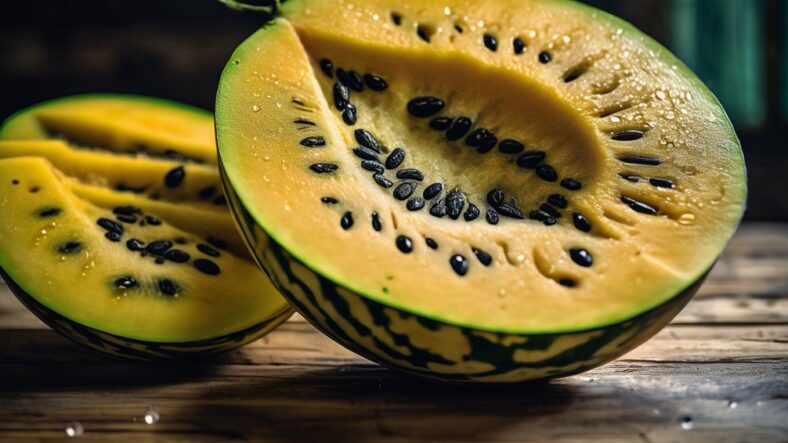
Yellow watermelon exists due to genetic differences that remove the red pigment lycopene and increase beta-carotene, giving it its distinct yellow color. You’ll notice it tastes sweeter and has a firmer, crisper texture compared to the typical red watermelon, which is juicier and mildly tart. This variety has been cultivated for centuries, valued for its unique flavor and appearance. Exploring its history, science, and culinary uses reveals why yellow watermelon remains a distinctive choice.
The Origin and History of Yellow Watermelon
Although yellow watermelons might seem like a recent innovation, their origins trace back centuries to Africa, where wild varieties with yellow flesh naturally grew.
You’ll find evidence of ancient cultivation practices that favored these unique regional varieties, each adapted to local climates and soil conditions.
Over time, farmers selectively bred yellow watermelons for their distinct color and flavor, preserving them alongside more common red types.
Understanding this history shows you how yellow watermelons aren’t a modern fad but the result of long-standing agricultural traditions that valued diversity and resilience in crop production across different regions.
The Science Behind the Yellow Color
When you look closely at yellow watermelon, you’ll notice that its color comes from the absence of lycopene, the pigment responsible for the red hue in traditional watermelons.
This difference results from genetic variation affecting pigment composition in the fruit’s flesh. Instead of lycopene, yellow watermelons contain higher levels of beta-carotene, a pigment that gives them their distinctive yellow color.
These variations occur naturally and have been selected through cultivation. Understanding this pigment shift helps explain why yellow watermelons stand out visually while maintaining the same species identity as their red counterparts.
Flavor Profile Compared to Red Watermelon
Since yellow watermelon contains different pigments than its red counterpart, its flavor profile also shows distinct characteristics.
When you make a taste comparison, you’ll notice yellow watermelon tends to be sweeter with subtle honey-like notes, while red watermelon offers a classic, invigorating sweetness with mild tartness.
Texture differences are also apparent; yellow watermelon often feels slightly crisper and firmer, providing a different mouthfeel compared to the typically juicier, softer red variety.
Understanding these contrasts helps you appreciate each type on its own terms, highlighting that color variations influence not just appearance but taste and texture as well.
Culinary Uses and How to Enjoy Yellow Watermelon
Yellow watermelon offers versatile culinary possibilities that extend beyond simply eating it fresh. You can incorporate it into salads, pairing its mild sweetness with tangy cheeses or crisp greens for balanced flavor.
Its firm texture holds well in fruit salsas or chilled soups, making it ideal for creative culinary applications. For serving suggestions, try grilling slices lightly to enhance its natural sugars or blending it into invigorating beverages.
You might also freeze yellow watermelon cubes for a subtle, icy treat. These ideas allow you to enjoy yellow watermelon in diverse, practical ways that highlight its unique qualities.
Frequently Asked Questions
Is Yellow Watermelon Nutritionally Different From Red Watermelon?
You’ll find yellow watermelon offers similar nutritional benefits to red, but with a sweeter, honey-like flavor profile. It lets you enjoy a fresh twist while still fueling your body with vitamins and hydration.
How Long Does Yellow Watermelon Typically Last After Being Picked?
You’ll find yellow watermelon lasts about two weeks if you watch ripeness indicators and practice good post harvest handling, like keeping it cool and dry. That way, you’re free to enjoy it at peak freshness.
Can Yellow Watermelon Be Grown in Home Gardens?
Yes, you can grow yellow watermelon in your home garden! With proper yellow watermelon cultivation and gardening tips like plenty of sunlight, well-drained soil, and regular watering, you’ll enjoy fresh, sweet fruit right from your own space.
Are There Any Common Allergens Related to Yellow Watermelon?
You won’t face unique allergen risks with yellow watermelon compared to regular watermelon. If you’re allergic to watermelon, avoid yellow watermelon too. Otherwise, you’re free to enjoy its sweet, invigorating taste without worry.
What Are the Best Storage Methods for Yellow Watermelon?
You should refrigerate yellow watermelon in airtight storage containers to keep it fresh longer. Cut pieces stay juicy and crisp this way. Don’t forget to wrap whole melons to avoid absorbing fridge odors.

Adriana Mercado is a writer who explores the intersection of science, futurism, and storytelling. She covers simulation theory, emerging technologies, strange biological discoveries, and the worlds created in sci-fi and fantasy. Her work focuses on curiosity, clear explanations, and uncovering ideas that sit just beyond the mainstream.